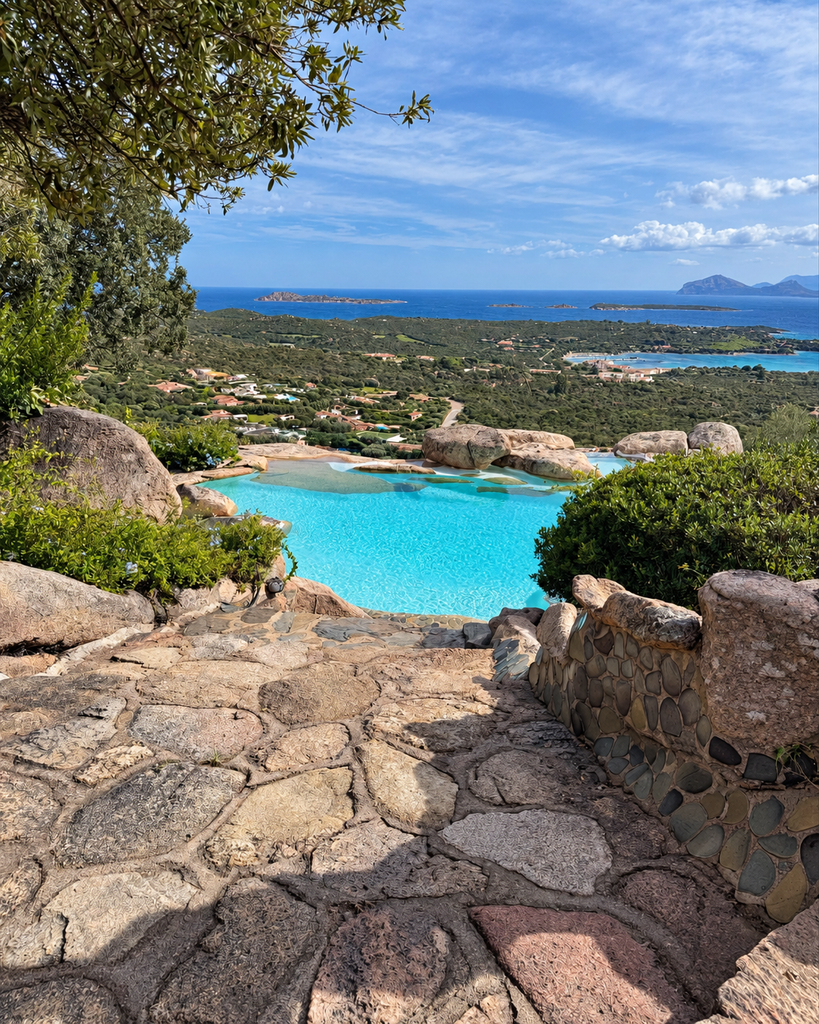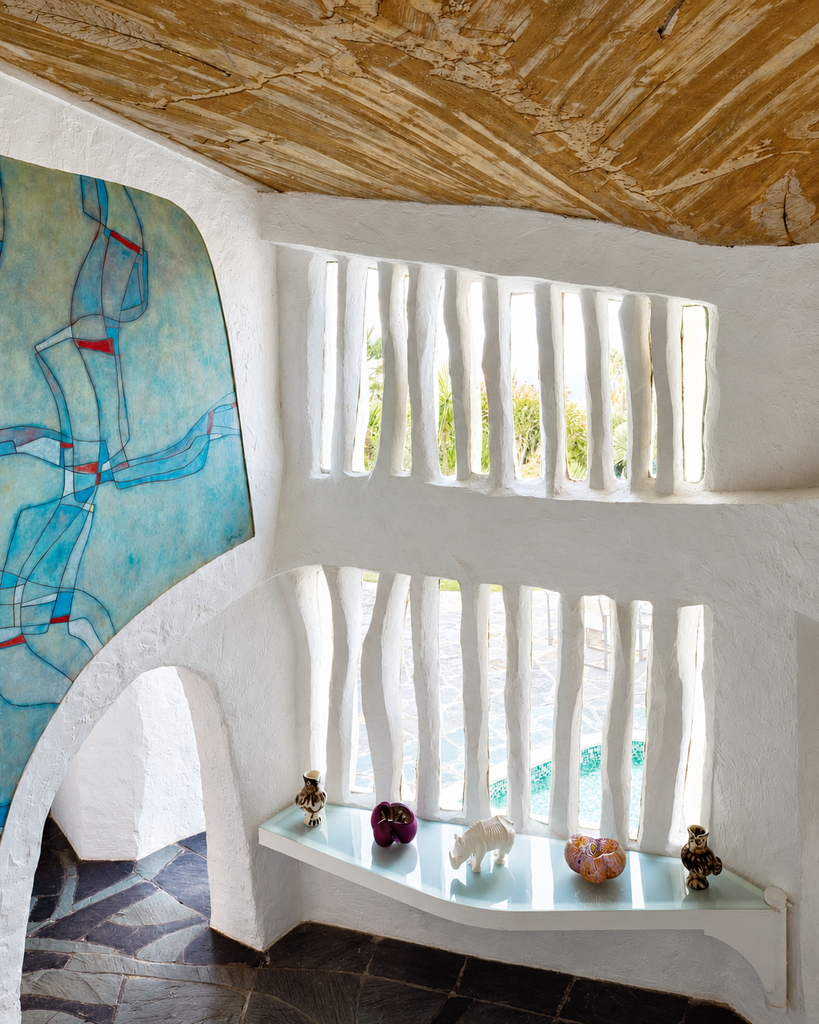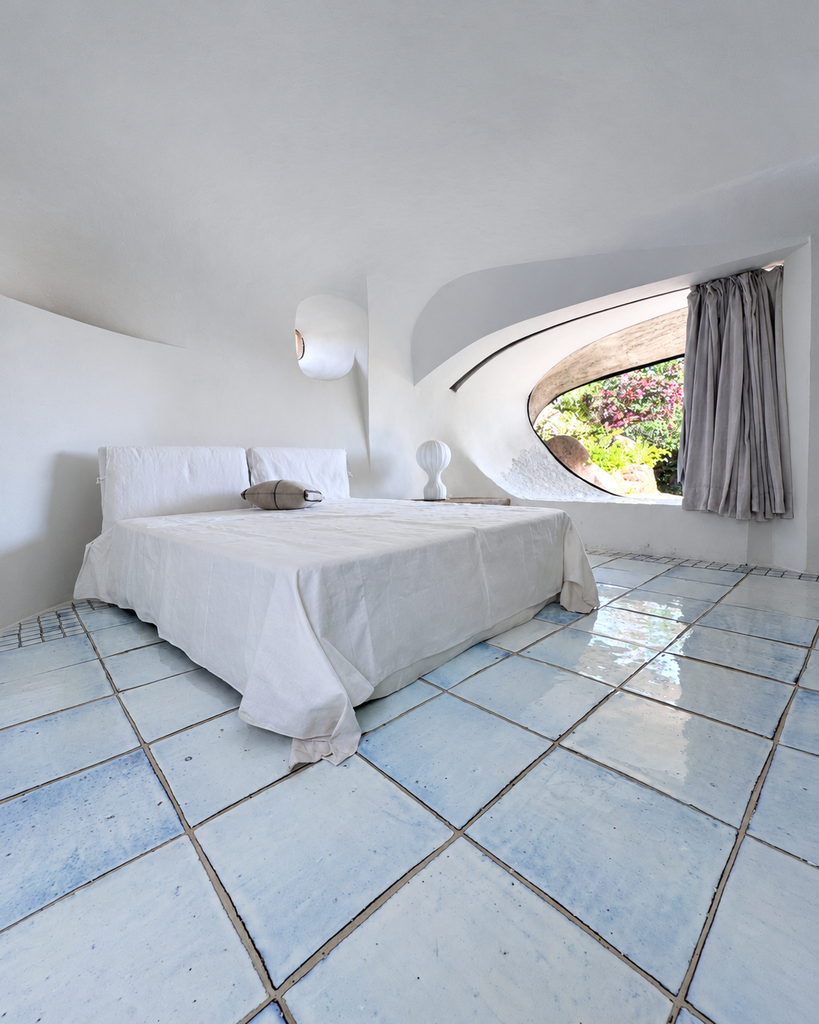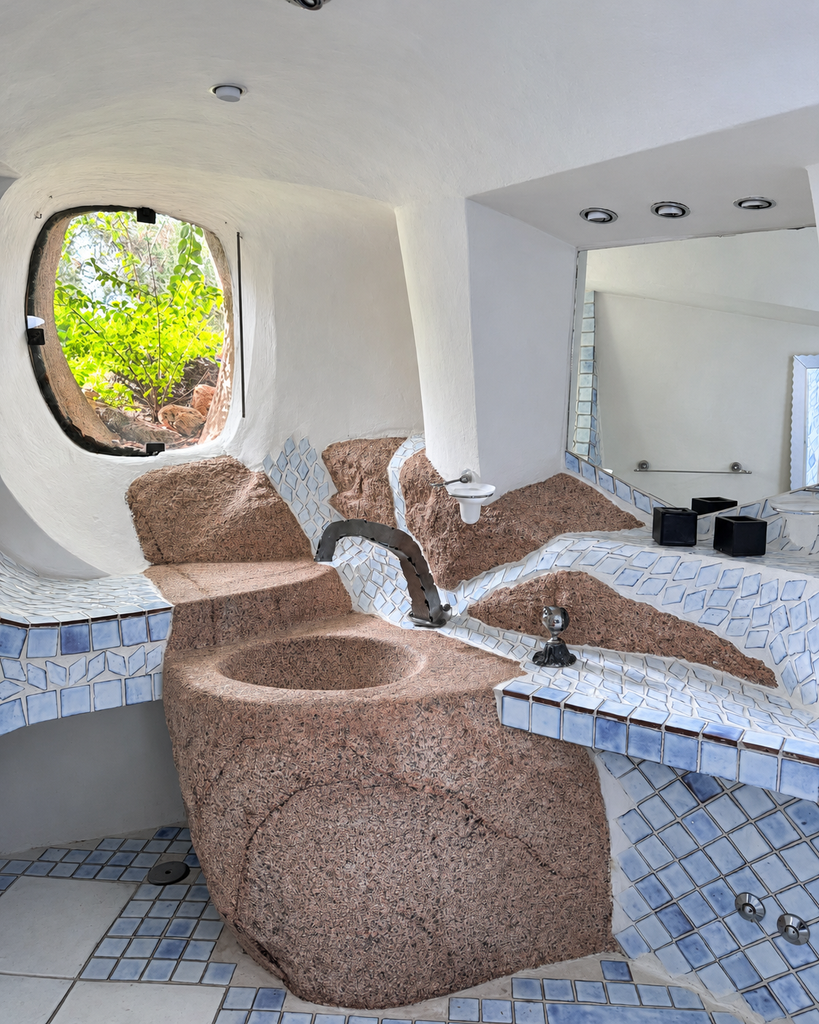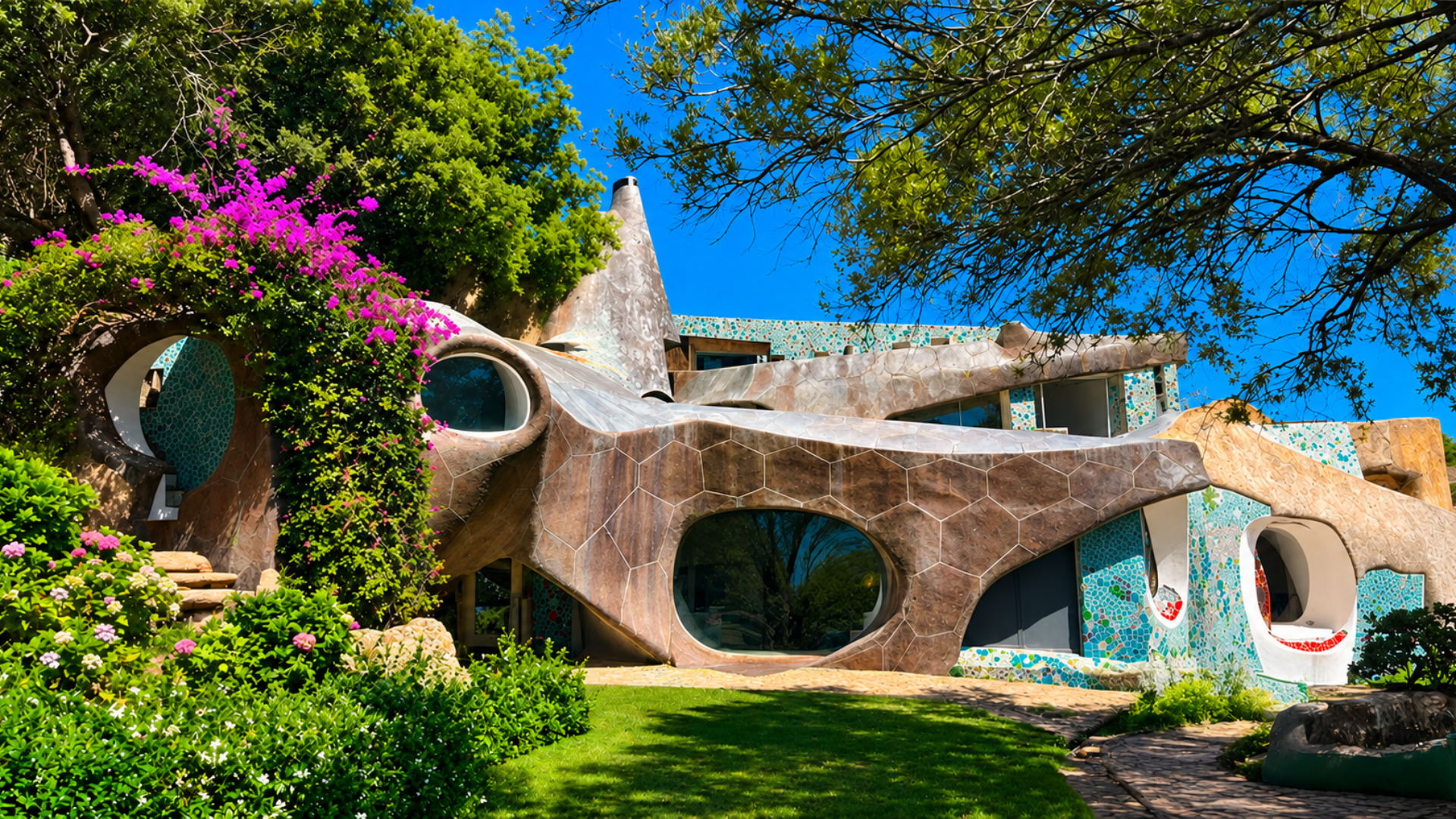
The villas of Monti Mannu reveal a chapter in the history of the Costa Smeralda in which architecture, landscape, and ceramics share the same sensibility: giving shape to an idea of beauty deeply rooted in the place.
There are places where the physical environment captures the spirit of an era. The Villas Jacques Couëlle of Monti Mannu, on the heights of Abbiadori, belong to this geography of memory: architectural works in which the natural landscape of Gallura meets a vision of living that is free, sculptural, and deeply Mediterranean. On the occasion of the FAI Fall Open House Days on October 10 and 11, 2026, over 3,500 visitors explored these spaces, rediscovering a heritage at the heart of the preservation and promotion initiative led by the Municipality of Arzachena.
Jacques Couëlle: Architecture in Harmony with the Landscape
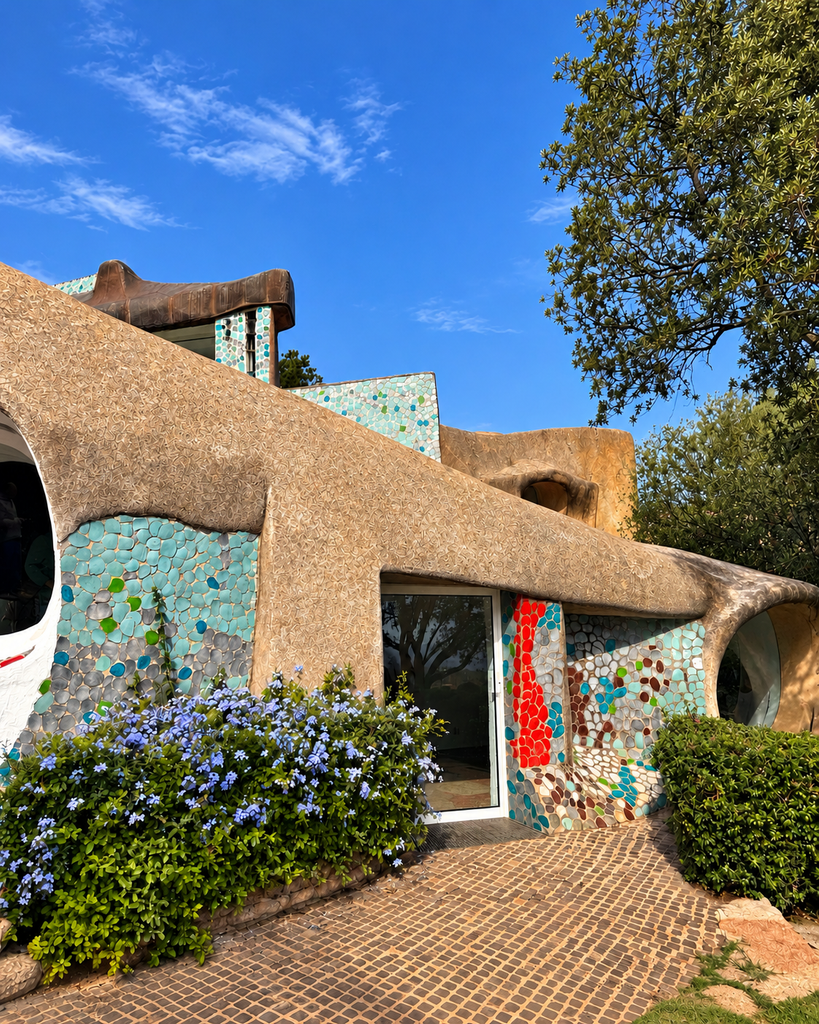
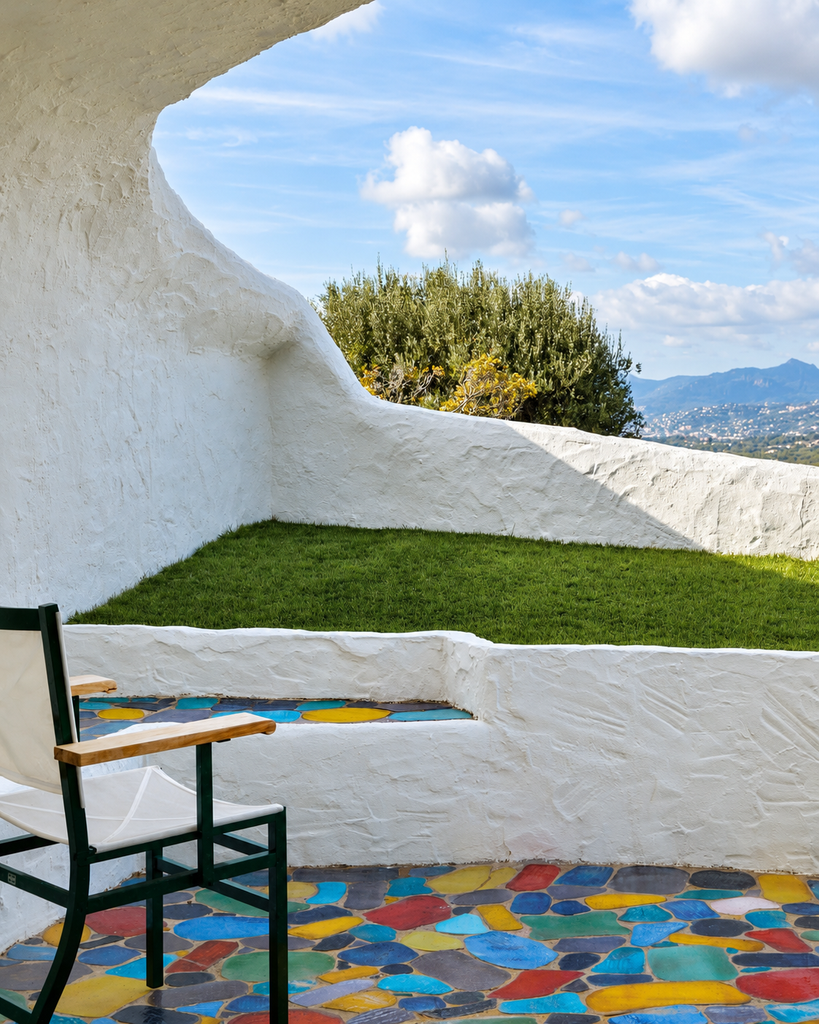
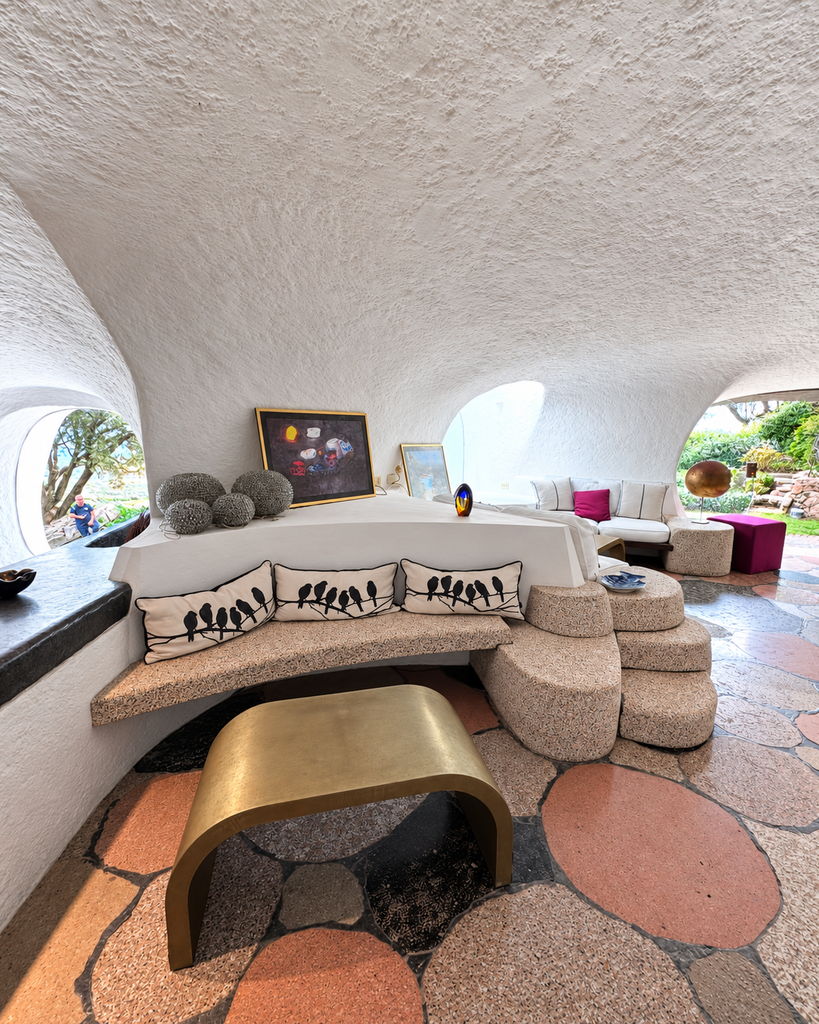
Called upon by Prince Karim Aga Khan IV to contribute to the Costa Smeralda project, Jacques Couëlle developed an architectural language inspired by the landscape. Granite defines the volumes, vegetation frames their contours, and light creates ever-changing depths. The spaces follow the topography of the land, opening onto the outdoors in an organic rhythm of solid and void. Villa La Grotta, built in 1968 as the architect’s personal residence, embodies a particularly intimate expression of this vision. Curved walls, recesses, and intimate passageways come together to form a habitable sculpture, shaped around everyday gestures and the silent presence of nature.
Cerasarda: Between Material and Mediterranean Memory
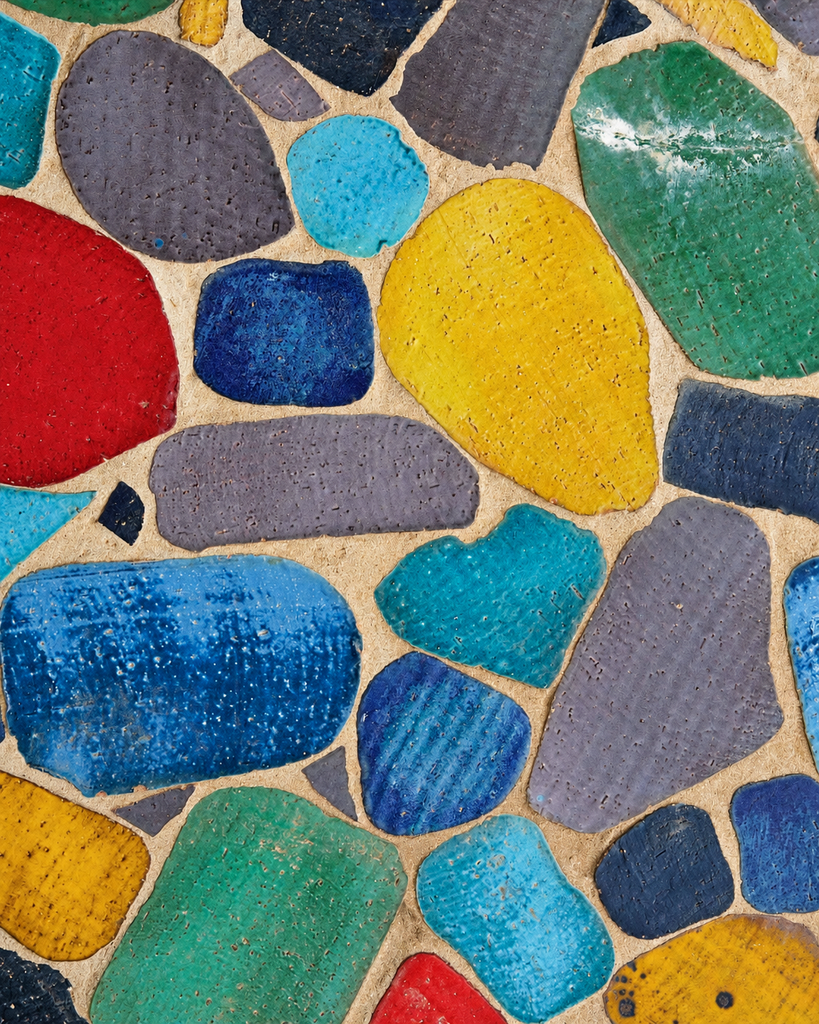
The origins of Cerasarda. Founded in Olbia in 1963 at the behest of Prince Karim Aga Khan IV, the company took shape within the context of the Costa Smeralda project, using ceramics to bridge the gap between design culture and artisanal expertise. The depth of the glazes, the nuances of color, and the artistry of the craftsmanship all contribute to defining the identity of the first residences and hotels, including the Cala di Volpe. Thus, a design language emerged that was destined to become part of the region’s collective imagination.
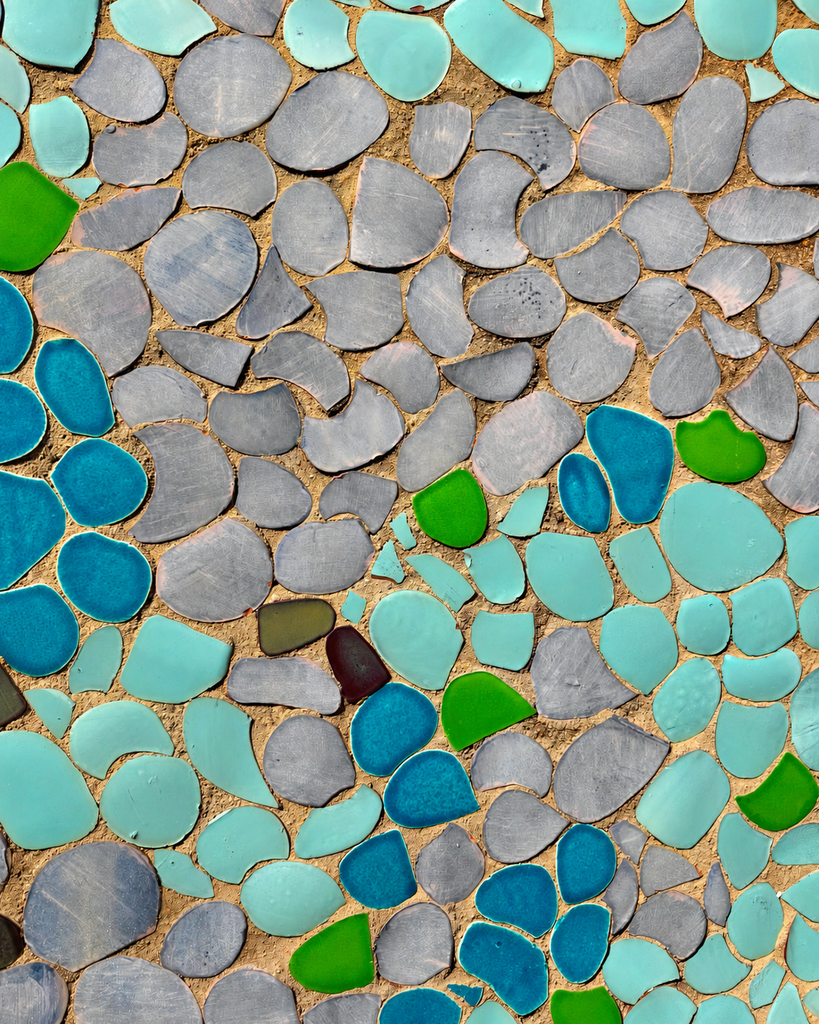
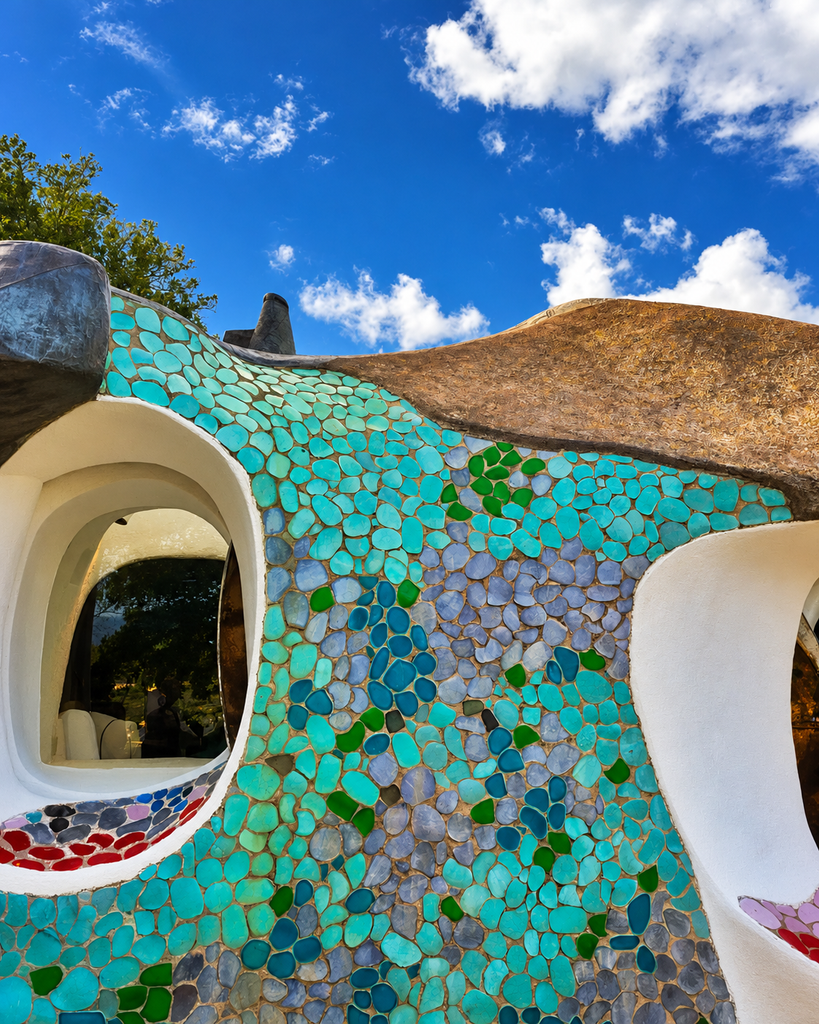
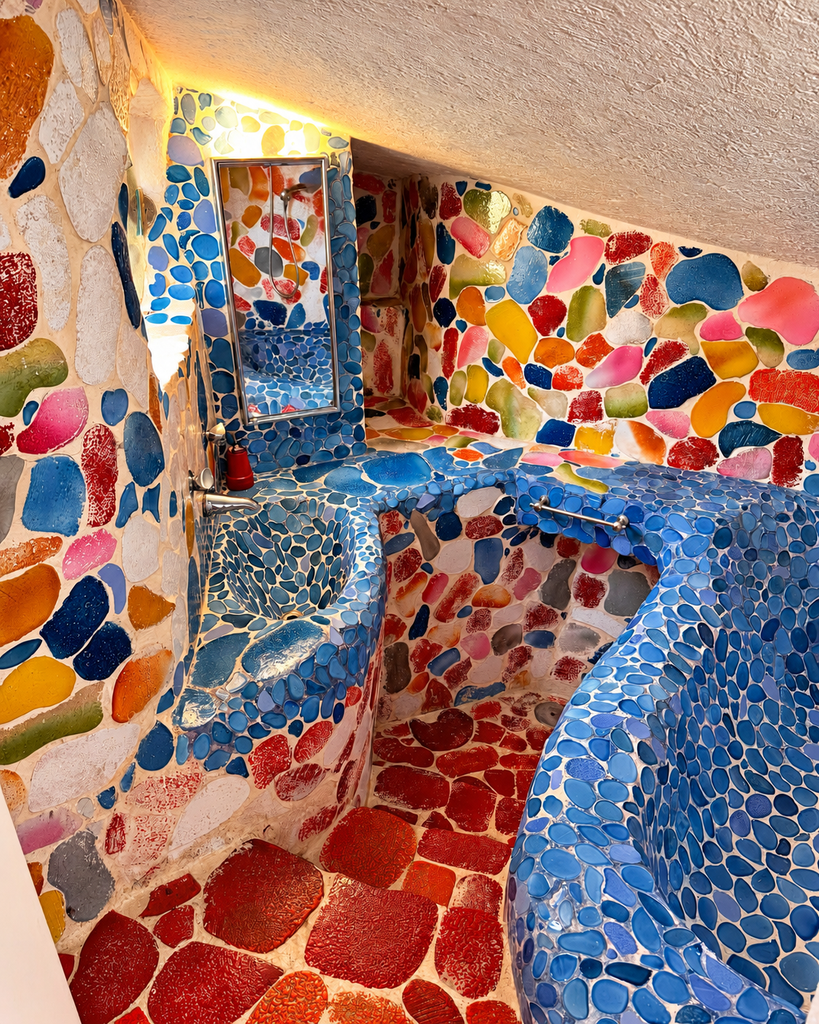
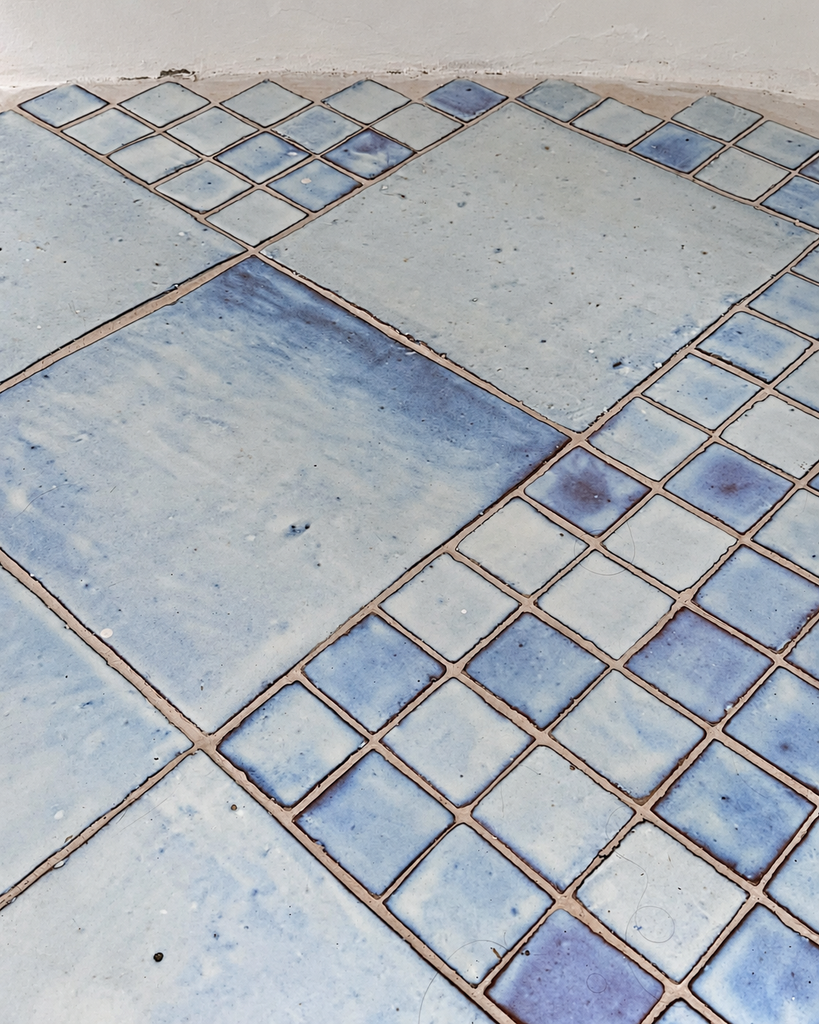
In the villas of Monti Mannu, this story unfolds through the presence of materials. Cerasarda’s circular tiles, available in various sizes, harmonize with the spatial dynamics of the rooms, introducing a rhythm of shapes and color accents into the architectural design. Some bathrooms also feature the brand’s colorful wall tiles, which have been reproduced over the years as part of restoration projects. This continuity is ensured by meticulous attention to detail, which preserves the original character of the spaces and the legacy of their craftsmanship.
An affinity emerges between Couëlle’s forms and Cerasarda’s surfaces—one that is inherent to the project’s sensibility. Color gains depth in the light; the ceramic complements the curves, highlights a transition, and restores a tactile dimension to the experience of living. The artisanal touch becomes part of the home’s overall design, contributing to that balance between expressive freedom and harmony with the landscape that distinguishes these residences.
A legacy that lives on
Today, the complex—owned by the Municipality of Arzachena—is slated to house the future Costa Smeralda Museum. This special opening marks a milestone in this journey and offers a fresh perspective on Couëlle’s work, along with the artistic and artisanal expressions that accompanied its creation.
For Cerasarda, seeing its surfaces in these architectural works means recognizing a part of its own history: color transformed into material, craftsmanship transformed into language, and the connection to Sardinia imprinted in the ceramics. A legacy that continues to inhabit these spaces and inspire new interpretations of the Mediterranean way of life.